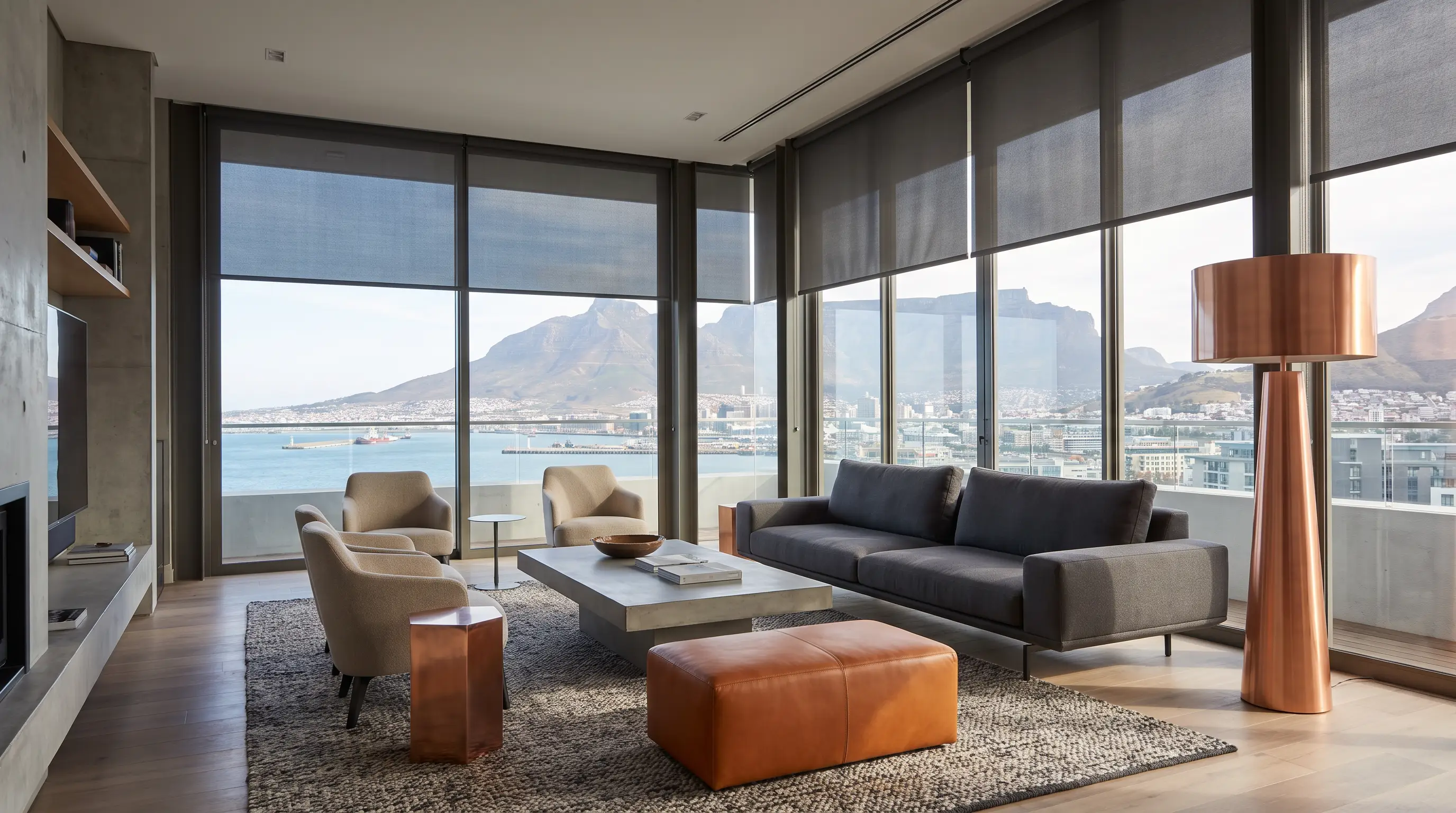
Fabric on a roll
One cassette, one length of cloth, and a choice about how much mountain you keep. Mesh for the view, blockout for the dark, air cells where a room runs cold in July.
Made-to-measure blinds, concealed ceiling-recess systems and wind-rated exterior shading for Higgovale's architect-built and heritage glass — measured on site, specified for a slope that catches the sun's full arc and the Cape Doctor at its strongest.
Higgovale runs from restored Victorian sash windows at the foot of the mountain to frameless double-volume glass higher up it — most houses need two or three products working together, not one blind doing everything. Twelve ways to spec it, grouped by how they actually work.
One cassette, one length of cloth, and a choice about how much mountain you keep. Mesh for the view, blockout for the dark, air cells where a room runs cold in July.
Tiltable light. Angle a slat and the glare goes while the daylight stays — the old answer to a sash window, and still the right one.
Heat stopped before it reaches the pane, on hardware rated for a south-easter that funnels through the upper Bowl. This is the group that changes how a west room feels at four o'clock.
Shading that disappears into the building, and shading that moves without you. Both worth planning before the plasterer arrives, though neither needs a renovation to fit.
A double-volume glass wall needs the view without the four o'clock heat. A bedroom needs proper dark, whatever the stoep outside is doing. A heritage sash window needs a fitting that respects the joinery rather than fighting it. The same consultant, one visit, and every window answered in writing.
Wind-rated fixings and sealed cassettes on anything mounted outside, chain and cord tensioners fitted as standard, and motorised options wherever hand-reach isn't the right answer — into a ceiling slot or a child's room alike. Where a facade change touches heritage rules, we say so plainly rather than call the approval a formality.
Higgovale climbs the Table Mountain slopes above Oranjezicht, with Lion's Head standing immediately to its north-west and Camps Bay just over the ridge — named for the Higgo family, Cornwall émigrés who owned the land and a local quarry from the 1850s. The stands here are steep, so orientation varies wildly street to street: a narrow-sash Victorian terrace can sit next to an architect-renovated home with floor-to-ceiling glass and a double-volume void, sometimes on the same block.
North glass gets sun every day of the year here — high and easy in summer, low and searching by June, so a modest eave that shades a north window at midsummer noon does almost nothing in winter. West is the harder elevation: Cape Town's summer sun sets well south of due west and keeps dropping through the afternoon, and on Higgovale's upper stands there's often nothing across the street to interrupt it. The City Bowl's "Cape Doctor" south-easter is funnelled hard between the sea and the mountain, and upper-slope addresses like this one feel it hardest — so anything left outside a Higgovale window gets a genuine wind rating. A structure over 60 years old also falls under Heritage Western Cape's rules for exterior alteration, and the neighbouring conservation overlay reaches into parts of the Bowl — we supply slim profiles and flag where a permit applies rather than call it a formality.
Tell us the rooms, the products you're considering, and whether the house is heritage-listed. The chat or the form takes about two minutes.
A consultant measures every opening on site, checks the fixing substrate and orientation, and brings fabric samples.
A quotation broken out window by window, lead times included, so nothing between the samples and the invoice comes as a surprise. As orientation before that: shading on this slope runs from roughly R1,000 to R7,500 per square metre installed. Hand-operated indoor blinds occupy the bottom of that, wind-rated systems motorised outside the glass the top, and very small openings are billed at a minimum charge.
Every piece is manufactured to your measurements and installed cleanly by our own team.
Higgovale Blinds specifies and fits made-to-measure window shading on this slope and across the City Bowl — Oranjezicht, Tamboerskloof, Gardens and the bowl itself. Roller blinds, aluminium and timber venetian blinds, concealed ceiling-recess systems and folding-arm awnings are made up to whatever your openings actually measure. Between architect-designed glass on one stand and an older house with deep reveals on the next, there is no standard size here worth ordering to.
The sequence does not change. An enquiry lands, typed into the form or into the chat window. From there one of our expert consultants will contact you shortly to set up a free in-home measure. On the visit each opening is measured, the fixing substrate and the orientation are checked, and fabric, openness and control are settled one room at a time, against the light and the exposure that particular window has. A written quote follows, itemised per window. On your approval the order goes into production at those figures and our own team installs it, leaving nothing undemonstrated.
Whatever you send are held for the call-back alone and POPIA governs that. They do not get shared, do not get sold and do not join a list.
The same free-measure, written-quote process, adjusted for what each stand and each street's heritage status actually needs.
Yes — Higgovale is our home ground, and we measure and fit across Oranjezicht, Tamboerskloof, Gardens and the rest of the City Bowl too. Just beyond that line? Put it on the enquiry form and we'll confirm.
Not necessarily, but it can add a step. A structure over 60 years old generally needs a Heritage Western Cape permit before its exterior is altered, and parts of the City Bowl sit inside a formal heritage protection overlay. Anything mounted inside the window reveal is a furnishing decision and needs no permit; anything fixed to the outside of a facade — an awning cassette, a roller-shutter headbox — may need sign-off. We supply the product data and slim, quiet-coloured profiles a heritage application wants, and flag when a permit is likely rather than promise it isn't needed.
In order of effect: exterior shading such as external venetians or roller shutters (stops heat before it reaches the glass), sunscreen mesh inside (cuts glare and load while keeping the view), and motorisation so it happens on schedule whether you're home or not — useful on west glass where the sun keeps dropping right through the afternoon.
Yes, and upper-Bowl addresses like Higgovale feel the south-easter's funnel hardest. We specify a genuine wind rating on anything mounted outside and recommend a motor with a wind sensor on awnings and zip screens, so they retract before a gust rather than after.
A tensioner comes fitted as standard on every blind we supply with a cord or a chain. In a nursery or a child's room we would usually steer you towards wand-tilt, cordless or motorised operation; mention it to your consultant and it goes into the quote.
Nothing. Measure, samples, consultation, written per-window quote: all free, and no obligation to order.
Free in-home measure, a written per-window quote, and a consultant who already knows the Bowl's heritage rules.
A line or two about the rooms, and the products you have in mind, is enough. One of our expert consultants will contact you shortly to arrange your free in-home measure.